 Messed!Up
One of the legendary German bands and pioneers of modern darkwave, mixing new wave and post punk, was born in 1985 in Cologne when student Mic Jogwer answered an ad from Thomas Elbern about forming a new band. Pink Turns Blue were born, band members came and went – Elbern left the band before they recorded their debut album, If Two Worlds Kiss – and today, twelve studio albums and heaps of singles later, Jogwer is the only remaining original band member.
At the end of February this year, about forty years after Jogwer answered on Elbern’s ad, Pink Turns Blue released their twelfth studio album Black Swan, an album that makes us understand why they’re being called pioneers in the darkwave/post punk scene.

When the band popped by Tower Musikclub in Bremen for a gig on the Black Swan Tour, we sat down with Mic Jogwer for a chat about the metaphor of the black swan, why only a fragment of his music end up on record, and the reasons for not playing some of their older songs anymore. And he also gives a sort of answer about a possible upcoming 40th anniversary.
The black swan metaphor
You must have been asked this one many times already. But where does the name Pink Turns Blue come from?
“Hüsker Dü. The Song “Pink Turns to Blue“was written by Grant Hart. I believe in every word he has written. The guitar rock genre is the kind of music that I like most and what I grew up with. Grant Hart is such a talented and brilliant musician.”
“But there are lots of influences, music-wise. The point is, I like sad music as well, like The Cure’s “A Forest” – one of the best songs to relax to. It’s just such a beautiful piece of music. But when I think about how dark wave and the music we do, I must say that things have changed a lot.”
To begin with, let’s talk about your latest album, Black Swan. I know what the metaphor means in English, but I’m curious about who or what the black swan represents to you?
“That’s a long story. It all started shortly after we released the album Tainted in 2021. We were touring in the States with a bunch of younger bands like Drab Majesty, She Past Away, and some others, and it was a great experience for us. I like them a lot, and it was funny to see how they reacted when we met for the first time. She Past Away walked up to us and asked if it was possible to take selfies with us. But they didn’t know that it was us who were excited about shooting photos with them. I mean, today, they’re well-known in Europe and the States, and even if I wouldn’t want to write their type of music, I have to admit that I like what they do. They’ve got one or two brilliant songs.”
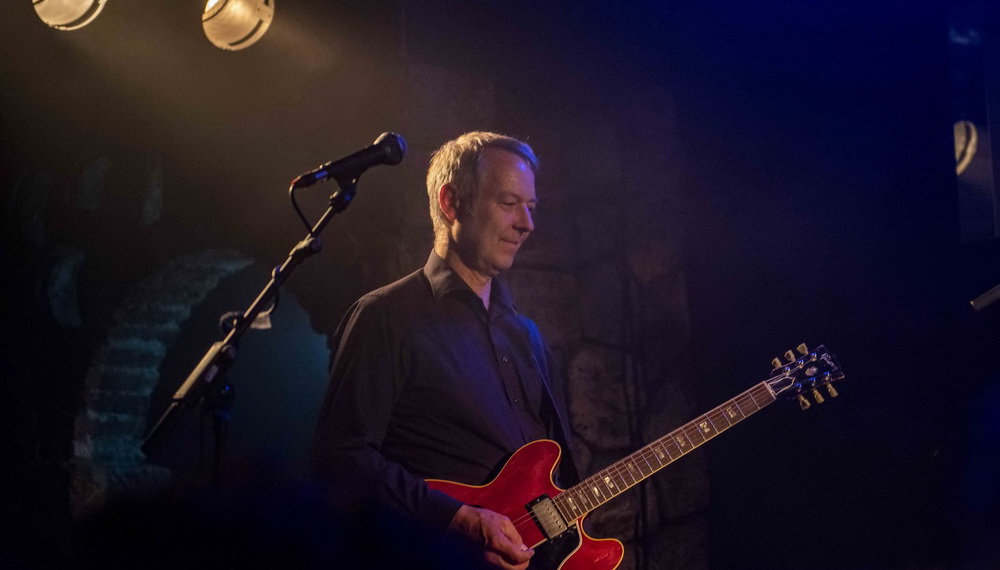
“When I started writing Black Swan, it was mainly as a follow-up to Tainted. Everyone was talking about how the world could be saved, you know, like climate change and if it’s too late, and that kind of stuff. In that sense, the black swan is the metaphor, as you mentioned, the event that could appear and save the world and finally make everything right.”
Most of Pink Turns Blue’s lyrics are about personal feelings, relations to other people, and not much about politics. But when I listened to the lyrics of “Like We All Do”, I got the impression that it was pointing out a foreign politician, especially the last part of the song, without mentioning a specific name here.
“No, that’s not the case at all. When I write lyrics, it’s all about me in the end. I am egoistic, selfish, even mean at times, but try to be open and empathetic at the same time.”
That´s very honest and open to say.
“Yes, it is. But we’re all human in the way we are, and if people are honest and look at themselves and how they behave, they must admit that they’re more or less the same. I write about my own experiences, things that happened to me. I don’t write what people expect me to do, I never did”.
When listening to Black Swan, I get the impression that you’re aware of what you have achieved so far, and you’re very grateful for it, yet you’re yearning for more as if you were searching for something even bigger and better. To me it’s like like a common thread running through all songs. Or am I mistaken here?
“That’s true in a way, but it has nothing to do with me as a person. It’s related to writing and releasing albums. When I write songs, I always try to write a better album than the previous one. I’ve always been like that. If I wasn’t, why would I release new albums then?”
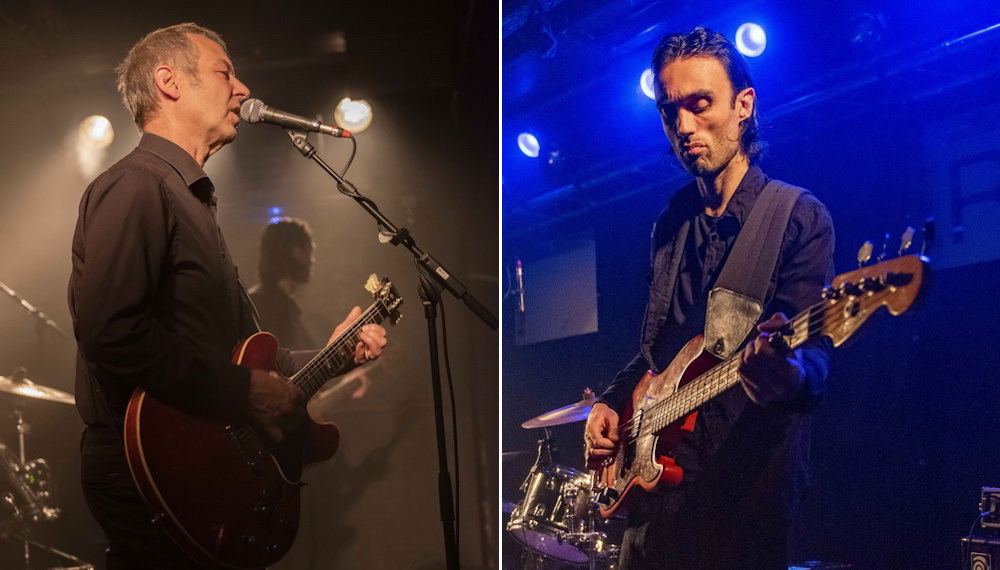
“Since the day we started, I’ve always done what I liked and what I wanted, and I’ve been fortunate not to have to compromise much at all.”
In 1991, I saw you for the first time live, in Nuremberg, and the songs from the Aerdt album you played literally blew me away. They were so emotionally strong. How come you don’t play songs like “Seven Years” or “The Gods Are Smiling” live anymore?
“We’ve got more than a hundred songs in our back catalogue by now. When we choose songs for the setlist, we pick most songs from the latest album, of course, and mix them with older songs. It’s more fun to play newer stuff when you’re not as used to them and haven’t played them that much yet than playing older songs. I like that type of challenge, even if there’s a risk of playing incorrectly just because they’re new; that won’t happen when we’re playing the old ones.”
“But talking about it, we did an acoustic version of “Seven Years” a while ago, so it’s not because they’re old, I just want something new to happen.”
I thought it might have been because of missing a keyboard player.
“No, technically, it would be possible to play them. We have the equipment with us on stage and we actually had a keyboarder as well, for some time. But she was afraid of flying, and at one point we had to take a flight, and she didn’t show up at the check-in and cancelled the flight on very short notice. But nothing of that would ever stop us from playing these songs.”
“Sometimes we go through our list of songs on streaming services like Spotify to see how many streams they’ve got. A song like “Seven Years” gets about 15 to 20 streams a month, which is not much compared to our total of 100 000 streams a month. So I think the demand for these songs audience-wise, isn’t very high. But “Seven Years” is still a song that I like a lot. There are older songs that are fun to play, like “Walking on Both Sides” or “Missing You”. They’re not that challenging to play, but rather fun for us because they’re uptempo songs. Whereas “Your Master is Calling” is a bit different.”
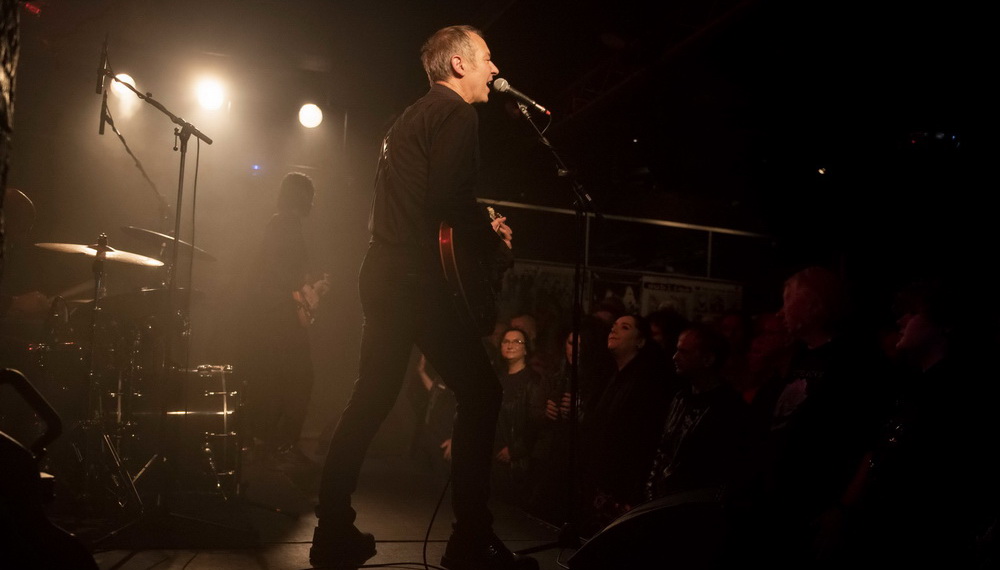
“It’s also interesting to see what song is popular in which country. If we play shows abroad, our audiences’ requests are very different. Well-known and popular songs here (in Germany) very likely end up on the request list from the audience, but they may not be that popular elsewhere. The best example is “Michelle; it’s very popular in Germany but not so much in the rest of the world. I cannot imagine a concert in Germany without that song. Why it’s so popular? I just don’t know. I guess the compilations we’ve contributed music to in Germany in our early days might have had an impact on that as well.”
You’re writing lots of songs every week, but you only release a tiny part of them. Do you ever sit down and listen to songs you haven’t released yet? And what happens to these songs?
(Laughs) “Who told you that?”
A friend of mine mentioned it.
“Ok. And it’s very much true. But the ones that don’t end up on an album end up in the trash, and I delete them. Some might say that’s a pity, but I feel relieved. It’s like a cleansing process to me where I get rid of a sort of ballast, something weighing me down in a way.”
The possibility of a 40th anniversary
Pink Turns Blue’s 40th anniversary will be next year. Do you have any plans to celebrate it?
“Well, 1986 is the correct year, but I consider 1987 to be the year we really started, because it’s the year we released the If Two Worlds Kiss album (debut album), and that means something to me. So, we still have two years to go. It is not a very long time, though. Maybe a bit too short. If we’re going to do something, we need at least six months of promotion, so people realize that there is something in the works. But I don’t know.
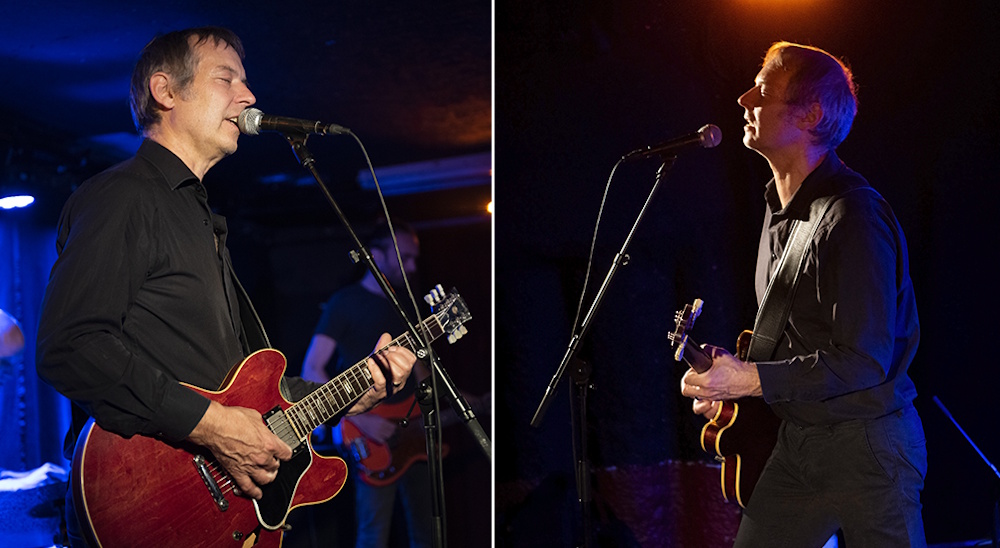
“I’ve been thinking about bringing ex-members back to the band, or playing If Two Worlds Kiss in its entirety as many bands have done before. But I have no idea if we can reach out to all the former band members and get something going. So, I really don’t know yet.”
What are your plans in the near future?
“Until the end of June, we’re touring in Europe, and then we’ll continue in North America for a month. Later this year, from September on, there are some shows in Poland, the UK, Hungary, Greece, and Turkey on the schedule. After that, in the next year, it may be time for a new album again. We’ll just have to wait and see.”
**********
Photographer: Guido Rangnitt
**********
Pink Turns Blue pages


